Volt Europa General Assembly 2026 in Bratislava: Europe discussed its future in Slovakia
On 13-14 June 2026, Bratislava became the venue for one of the largest pan-European political meetings of the year. The Volt Europa General Assembly brought together more than 900 participants from almost 30 European countries – members, elected representatives, experts, activists and civil society partners.
During the two days, discussions focused on European security, democracy, media freedom, artificial intelligence, the enlargement of the European Union and the future of Central Europe.
Welcoming Europe in Bratislava
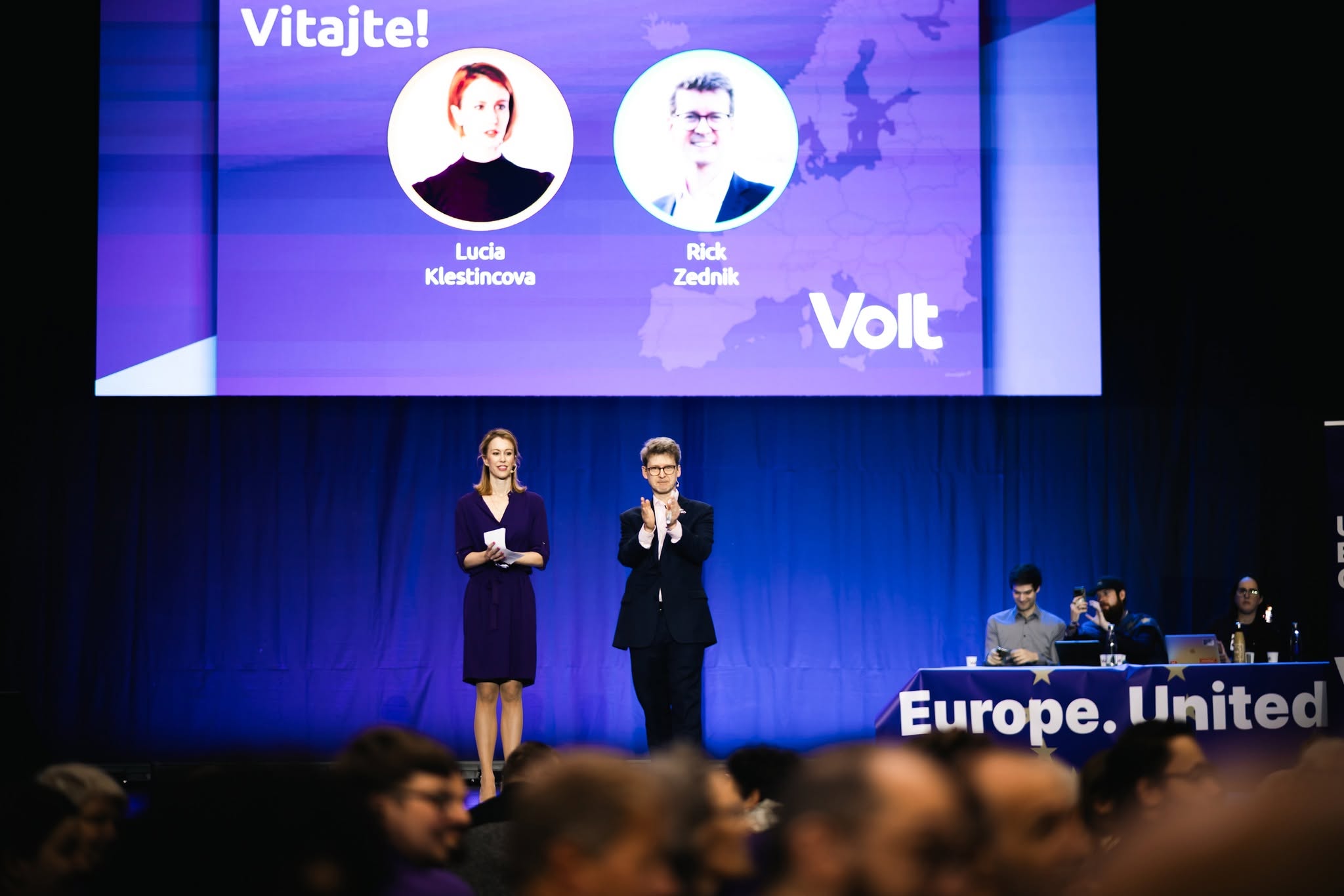
The General Assembly was opened by Volt Slovakia co-presidents Lucia Kleštincová and Rick Zednik, who welcomed hundreds of guests from all over Europe.
In their speeches, they emphasized the importance of European cooperation, the personal stories that brought them to Volt, and why it is important to build a common European policy across borders.
|
|

Central Europe as the strategic heart of Europe
One of the opening discussions was a debate on the role of Central Europe in current geopolitical developments.
Moderator Sebastian Schäffer, together with Magdalena Vášáryová, Anna Donáth and Mikuláš Peksa, discussed why Central Europe is not a periphery of Europe, but one of its crucial regions.
The discussion addressed the topics of protecting the rule of law, the resilience of democracy, regional security, economic development and the potential of Central Europe to play a more prominent role in shaping the future of Europe.
|
|
Free media as the foundation of democracy
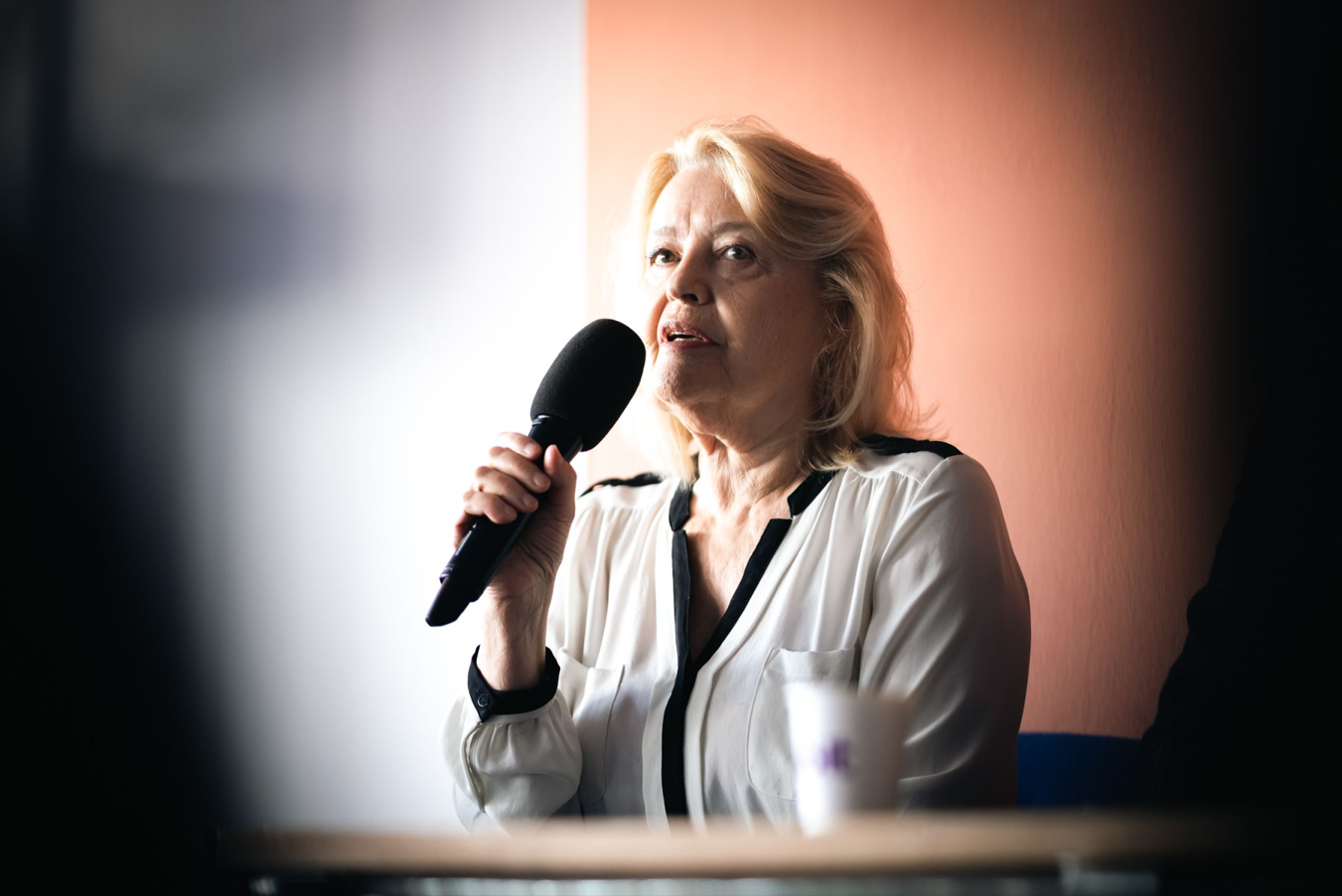
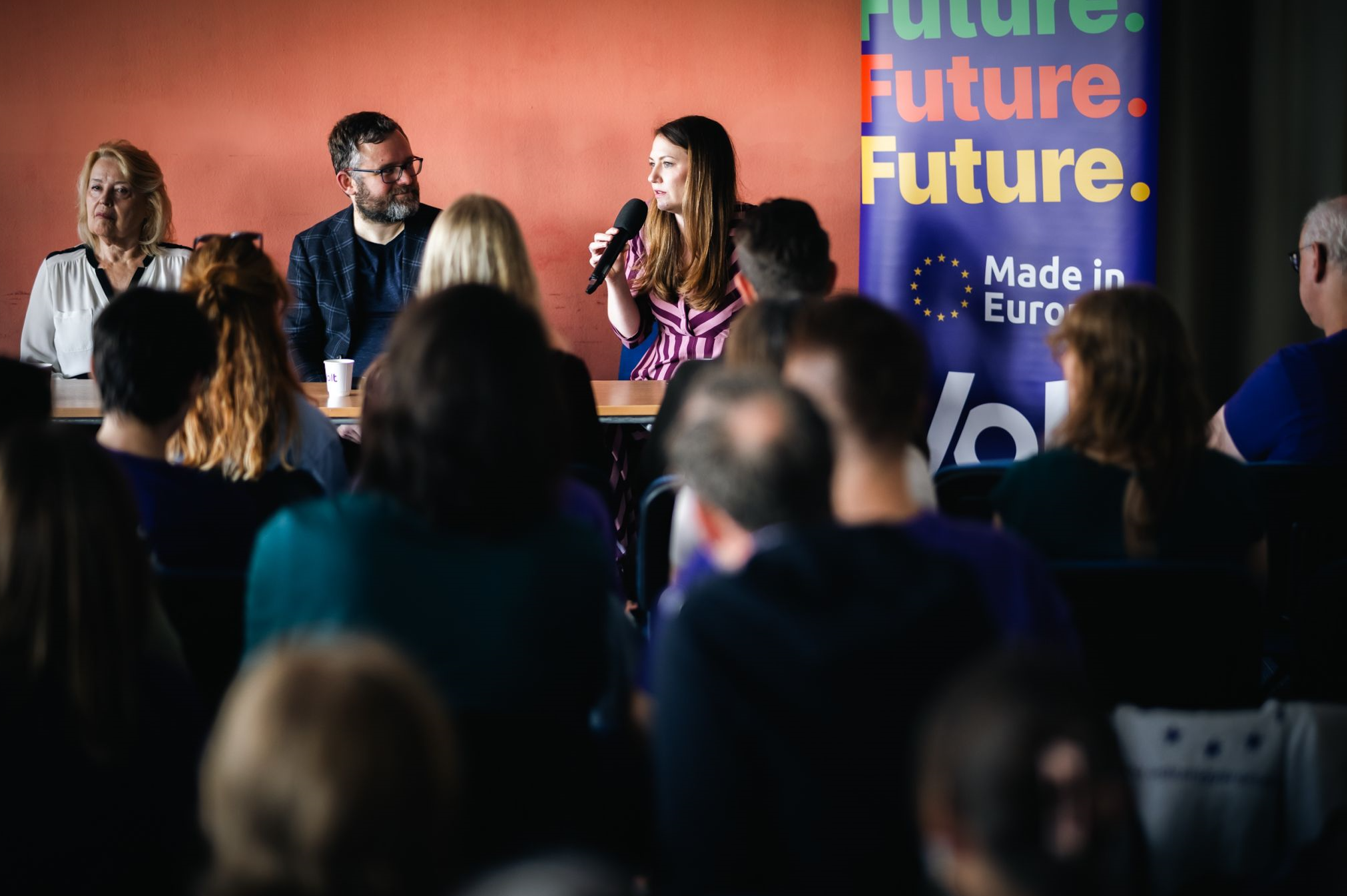
More than eight years after the murder of Ján Kuciak, the protection of journalists remains one of the most important topics of European democracy. Peter Hanák, Rasto Kužel and Sophie in 't Veld spoke in a panel discussion moderated by Eva Babitzová.
The discussion focused on the protection of investigative journalism, the growing pressure on the media, disinformation, freedom of the press and how democratic states can better protect journalists. The panelists stressed that a free media is not a luxury, but one of the fundamental pillars of a functioning democracy.
|
|
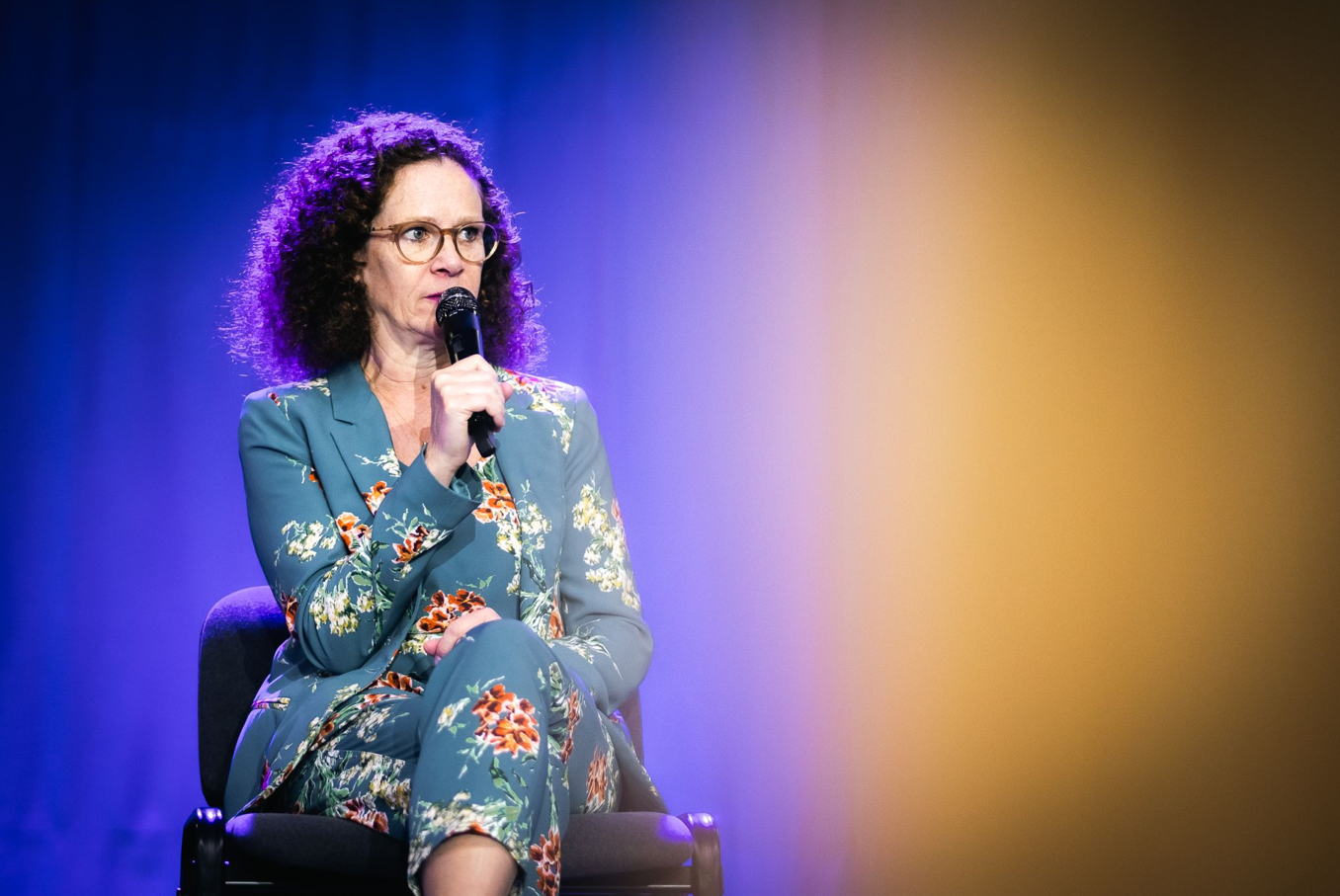

Does Europe need its own army?
The security situation in Europe was one of the most discussed topics of the entire weekend.
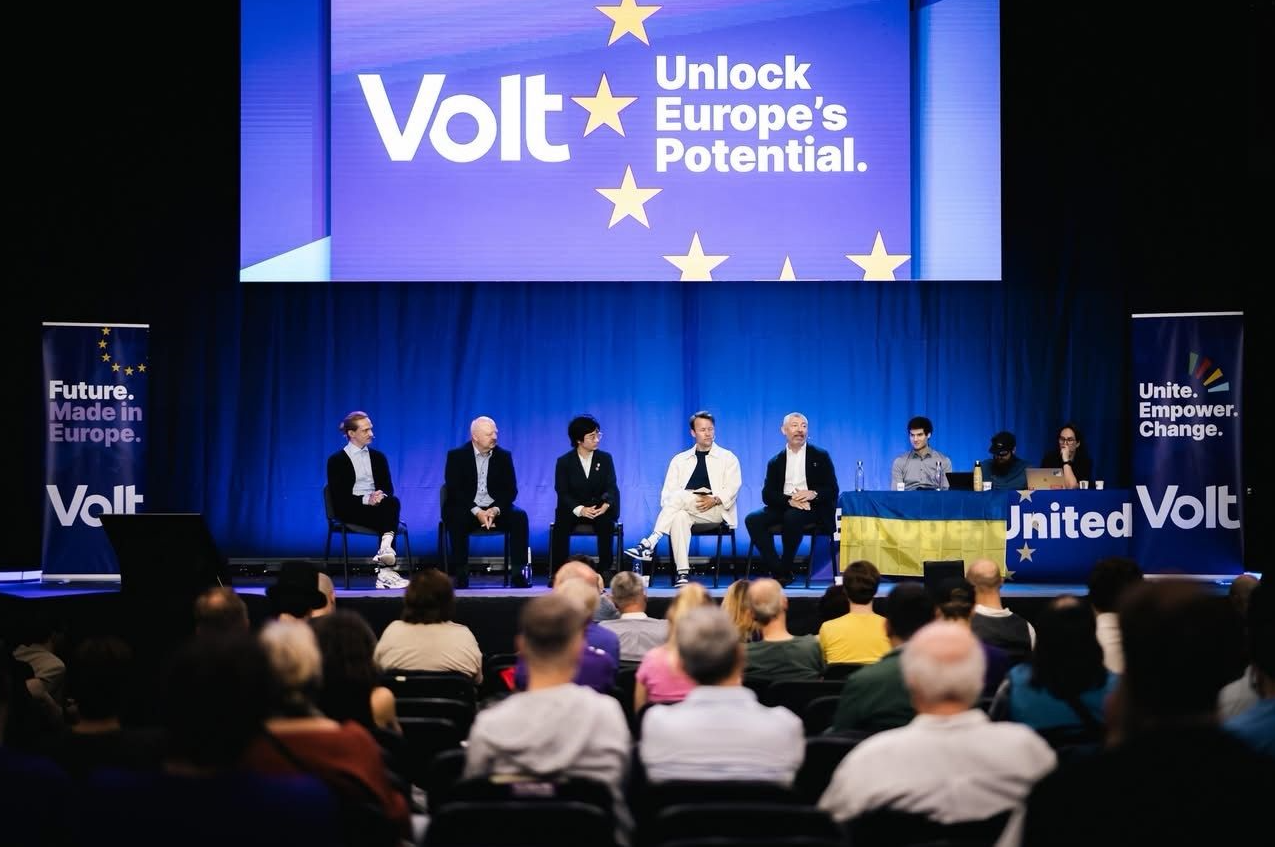
The panel "Why Europe Needs Its Own Army" featured Pavel Macko, Reinier van Lanschot, Ivan Scalfarotto and David Gazsi, moderated by Jon Lim.
The discussion focused on the future of European defense, Europe's strategic autonomy, the relationship between NATO and European cooperation, and practical possibilities for creating common European defense capabilities.
|
|
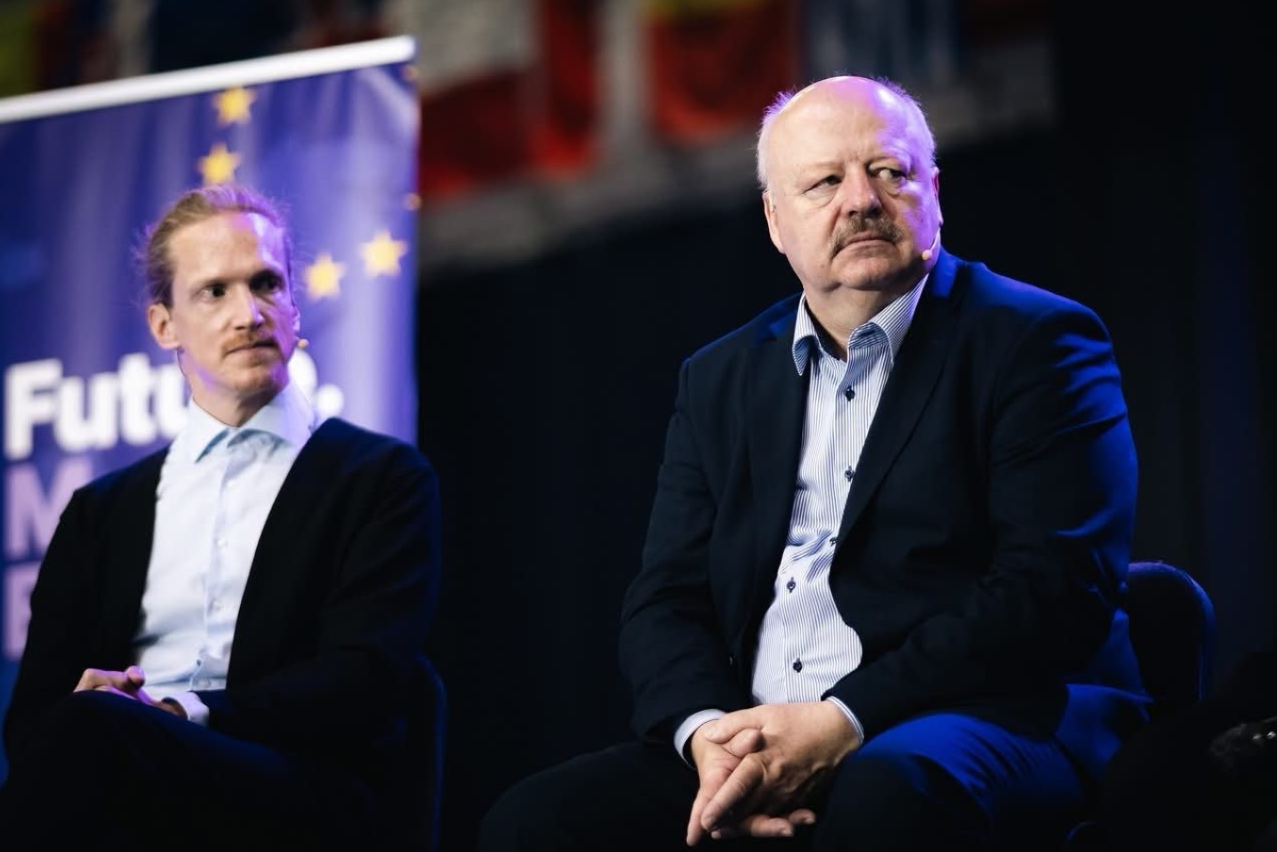
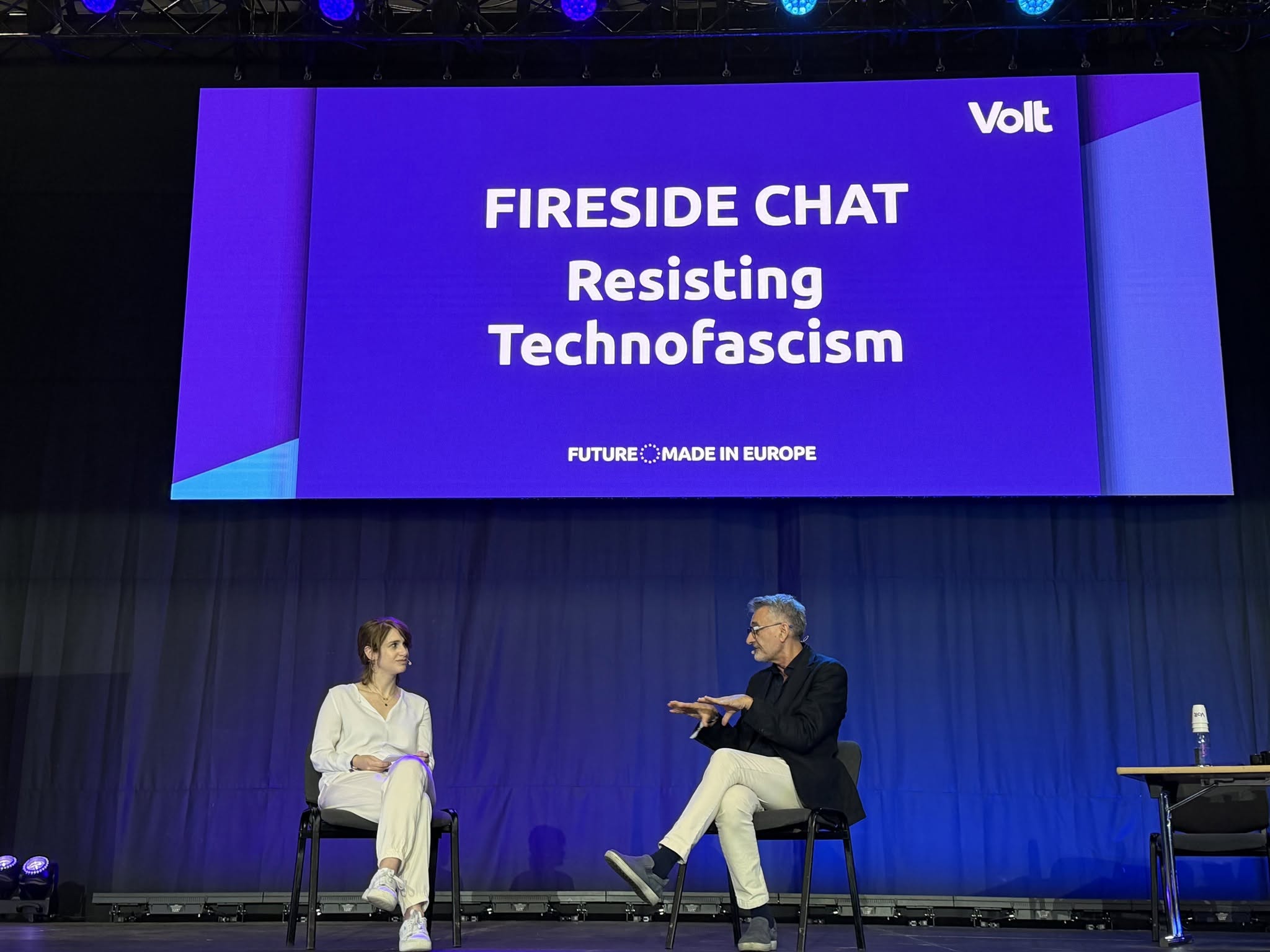
Artificial Intelligence and the Protection of Democracy
What role will artificial intelligence play in democratic societies?
This question was answered by Vladimír Šucha and Ronnit Wilmersdörffer during the discussion Resisting Techno-Fascism: Defending European Democracy in the AI Era.
The panelists discussed the growing influence of big tech companies, the risks of algorithmic decision-making, the protection of human rights, the regulation of artificial intelligence, and the need for technological progress to remain at the service of citizens.
|
|
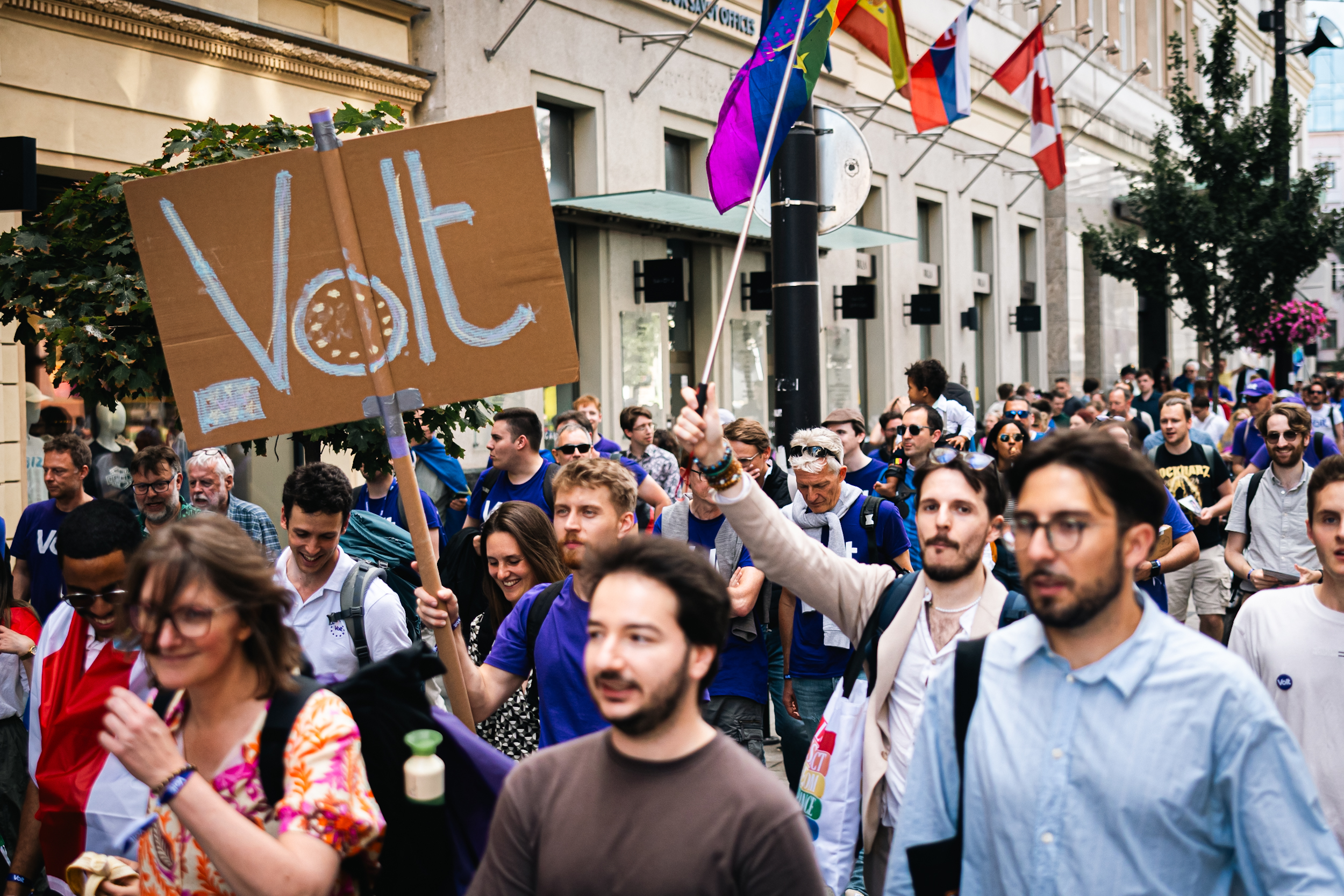
Europe united in the streets of Bratislava
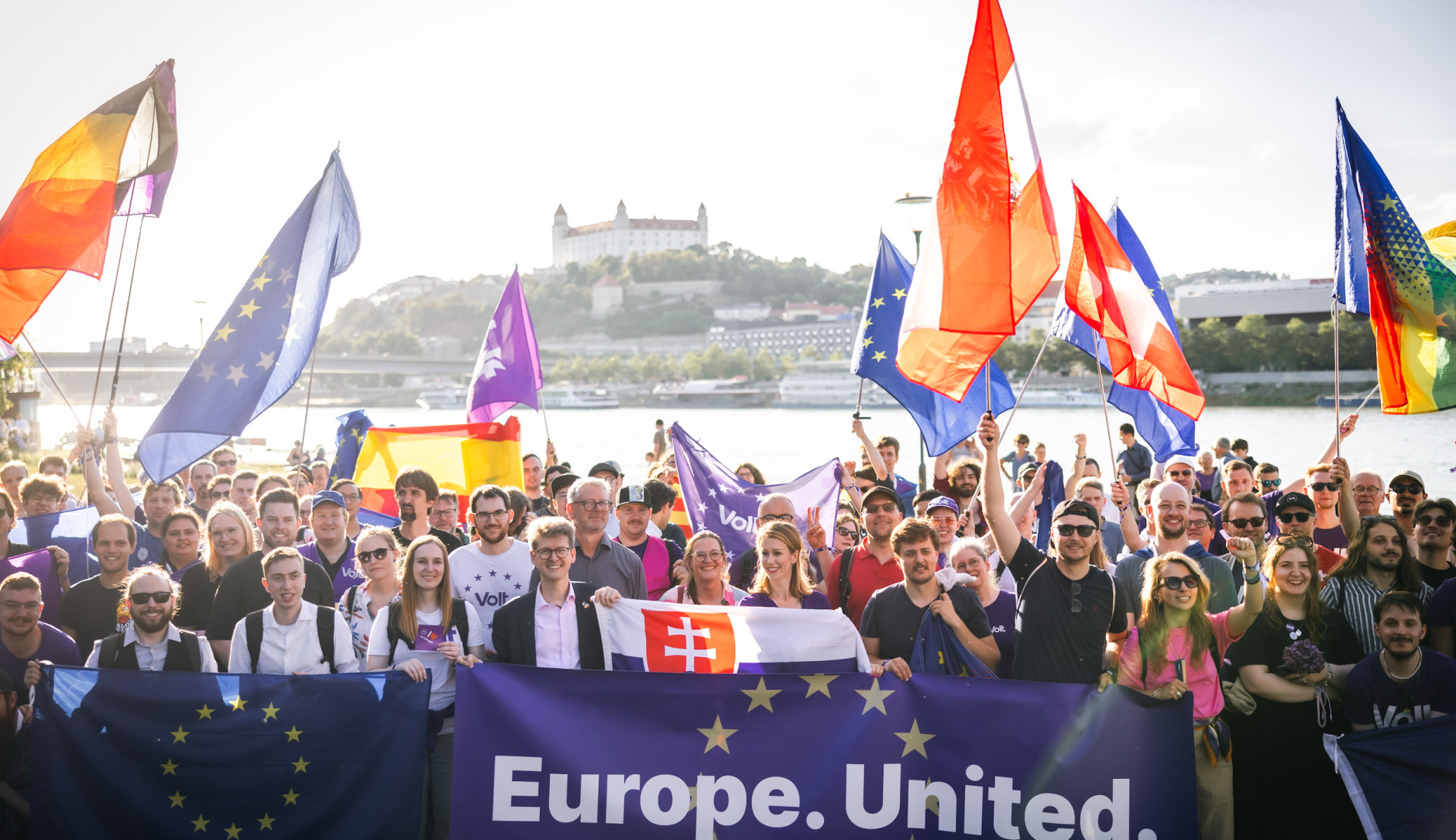
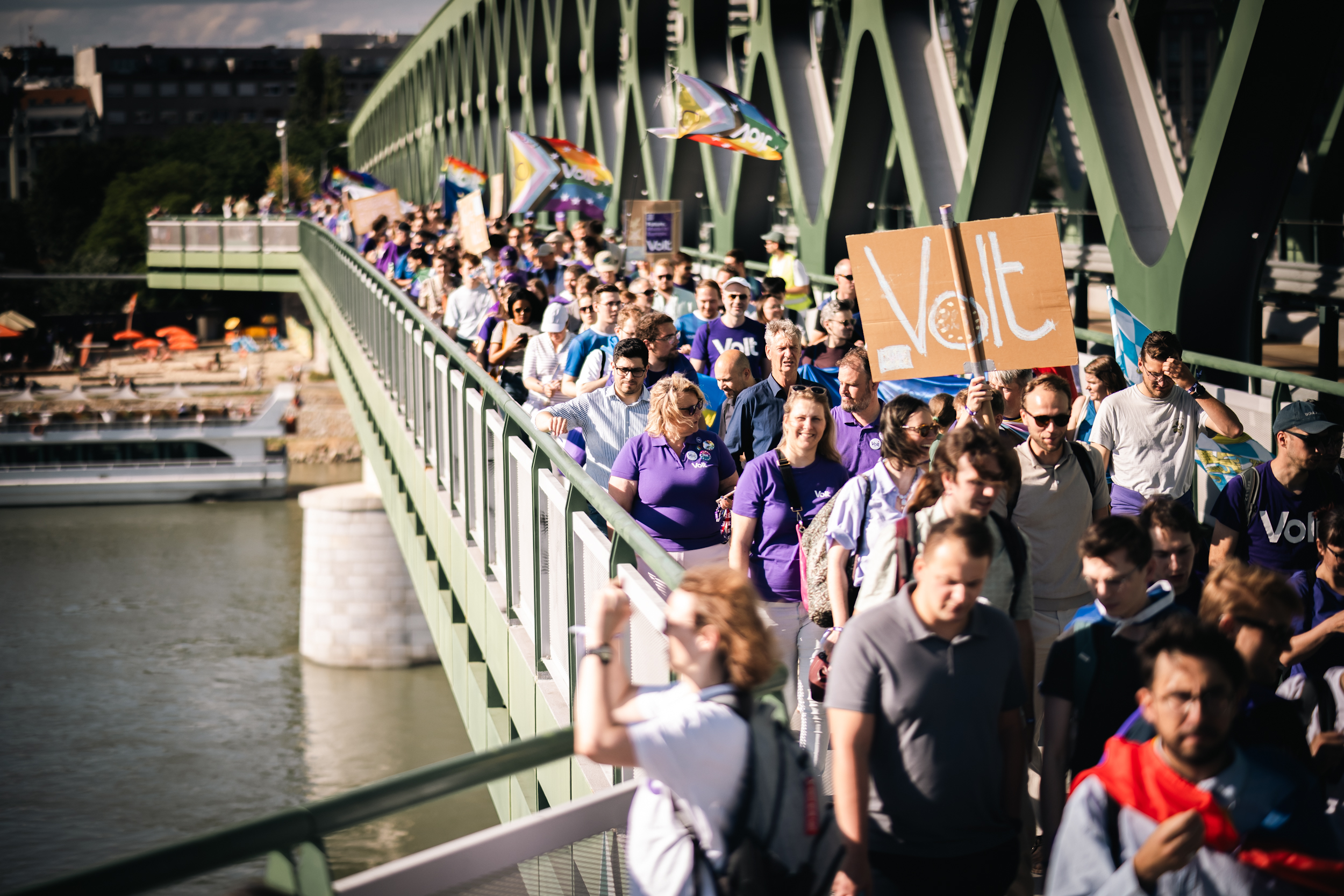
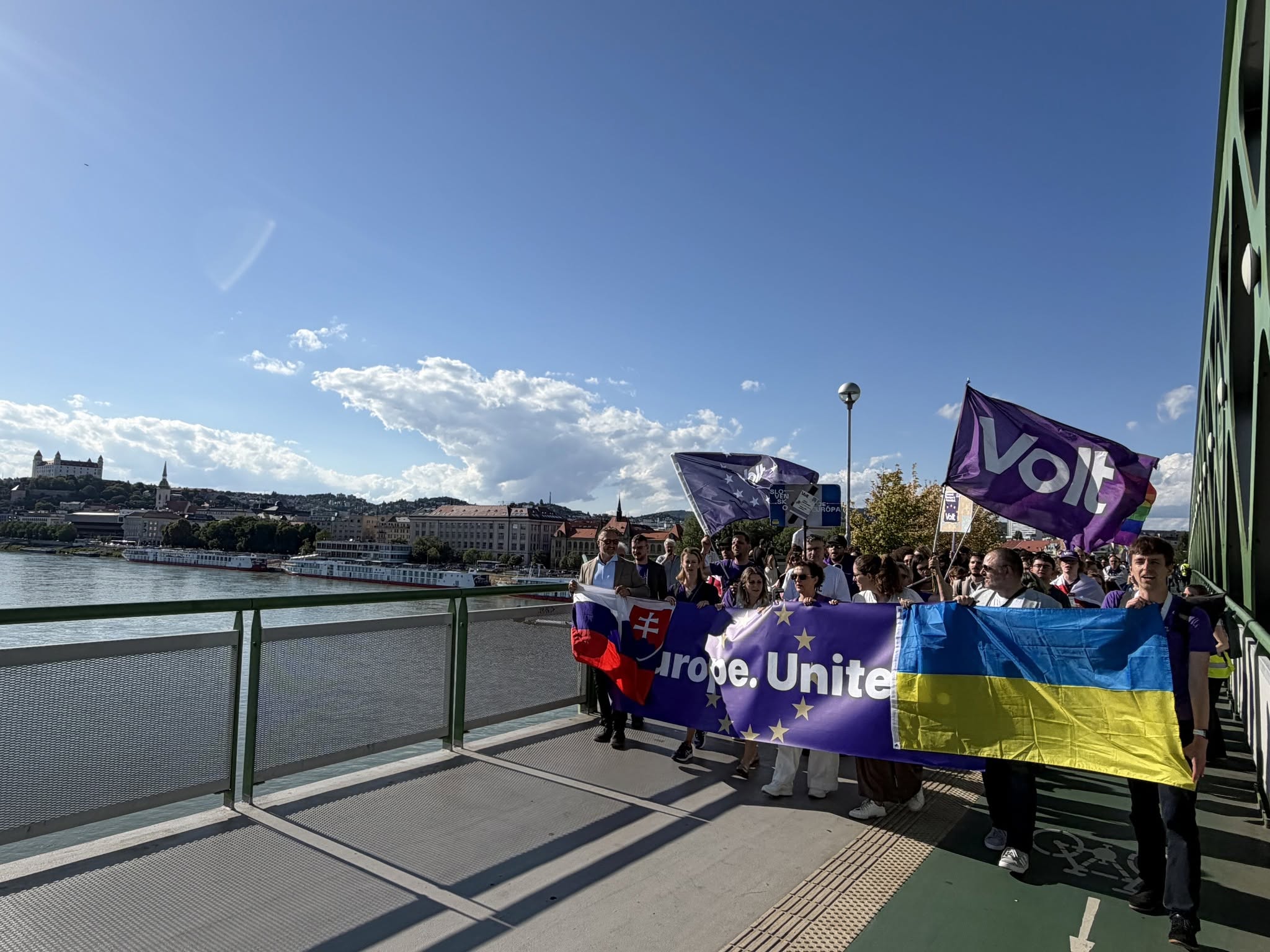
One of the most striking moments of the entire General Assembly was the Saturday public march "For Europe", which was attended by more than 700 participants from Slovakia and almost 30 other European countries.
The march began on the left bank of the Danube and continued across the Old Bridge to the Tyršovo Embankment. The route was not chosen by chance. The Danube, which connects ten European countries from the German Black Forest to the Black Sea coast in Ukraine, symbolizes the interconnectedness of European nations. The crossing of the river was equally symbolic, reminding us that Europe today is not united by borders, but by shared values, cooperation and freedom of movement.
Bratislava was an ideal location for this event. As the only capital city in the world bordering two states – Austria and Hungary – it naturally embodies the idea of an open Europe. Just a day after the march, Europe also commemorated the 41st anniversary of the signing of the Schengen Agreement, which abolished border controls between member states and allowed millions of Europeans to travel, work and study freely across the continent.
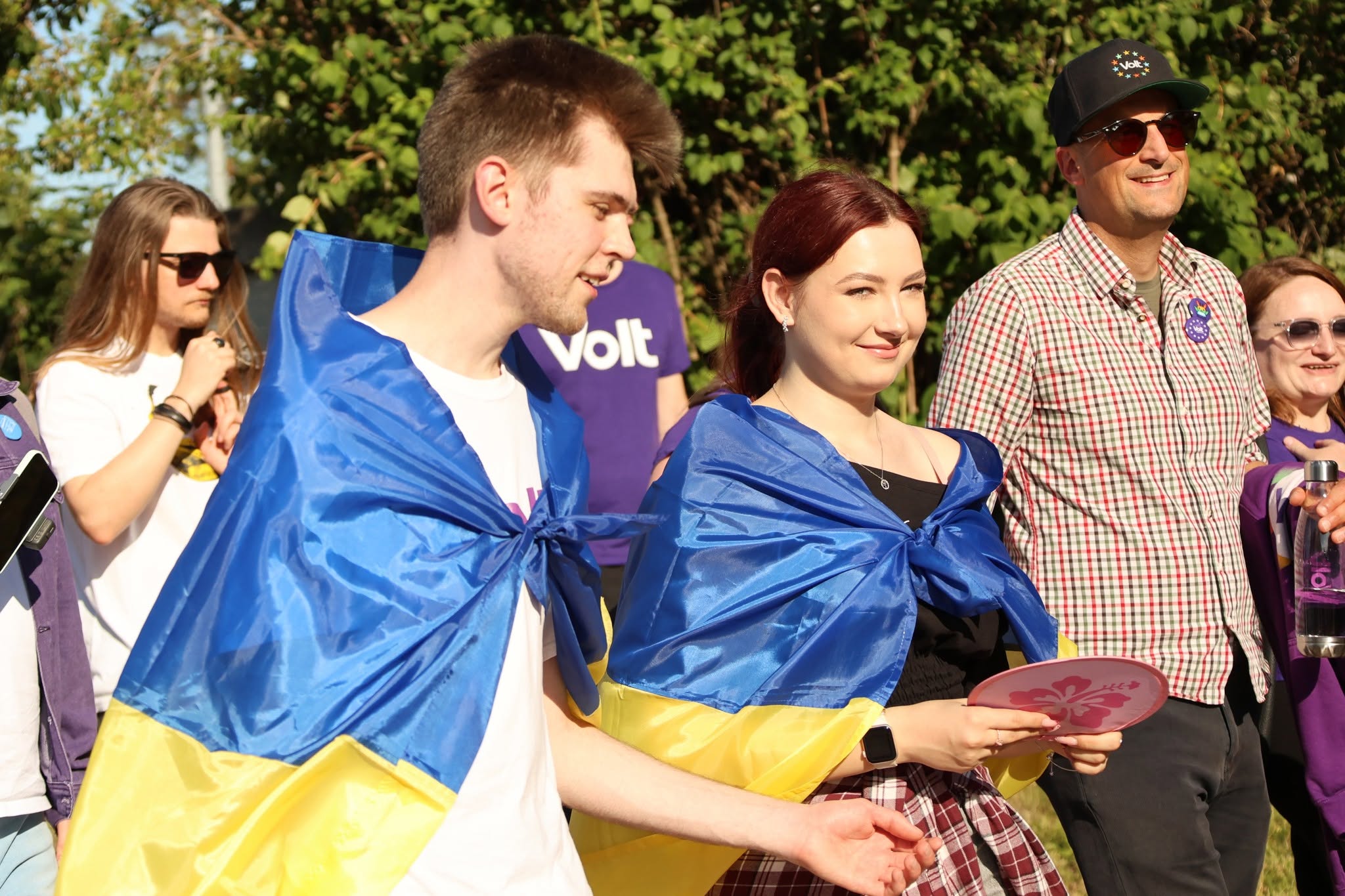
The march was also a public expression of support for Ukraine, European cooperation and democratic values. Participants carried the flags of European countries and the European Union, and together they sent a clear message that European unity is not a given, but a value that must be constantly protected and developed.
|
|
|
|
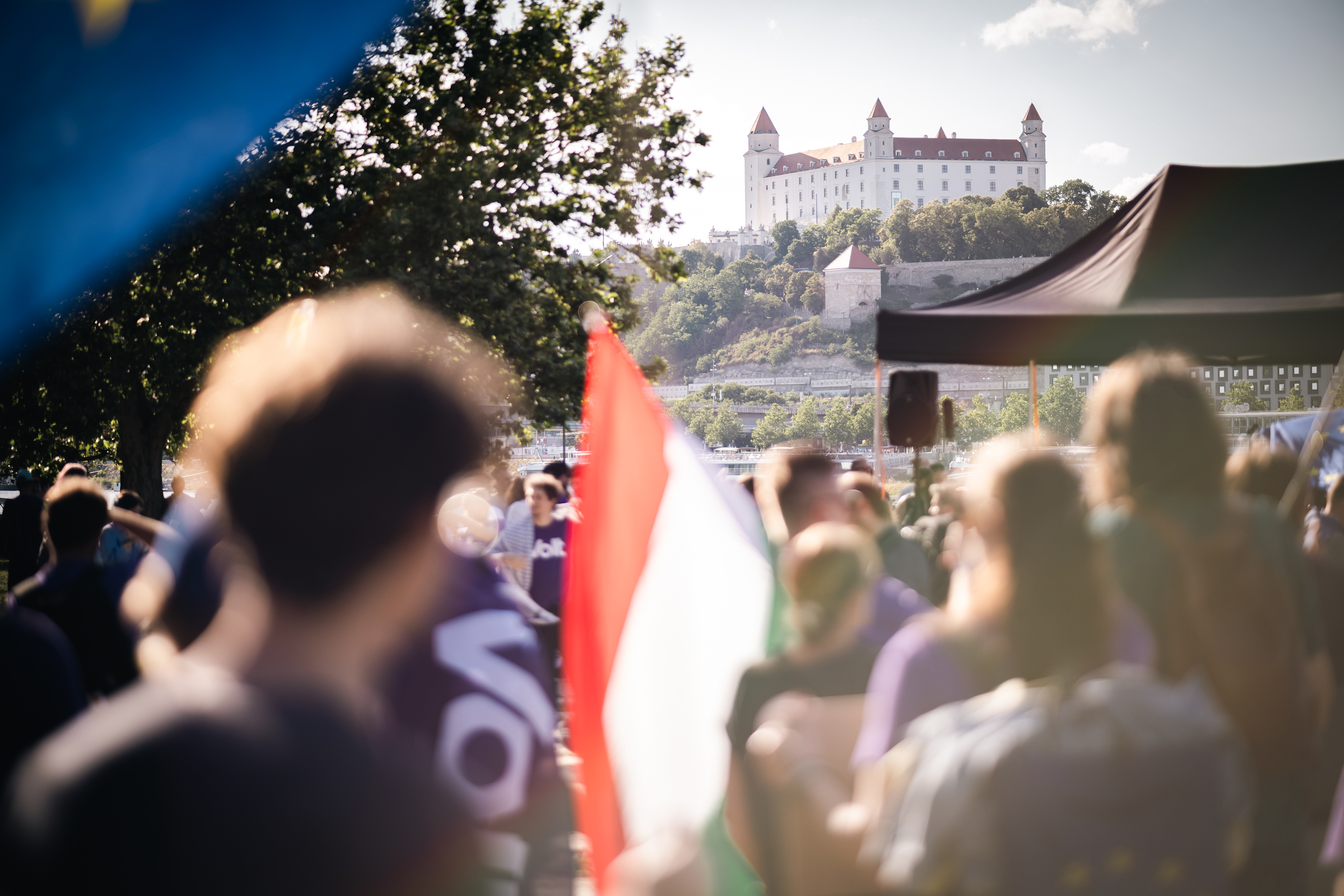
Public rally on Tyršovo Embankment: Europe stands with Ukraine
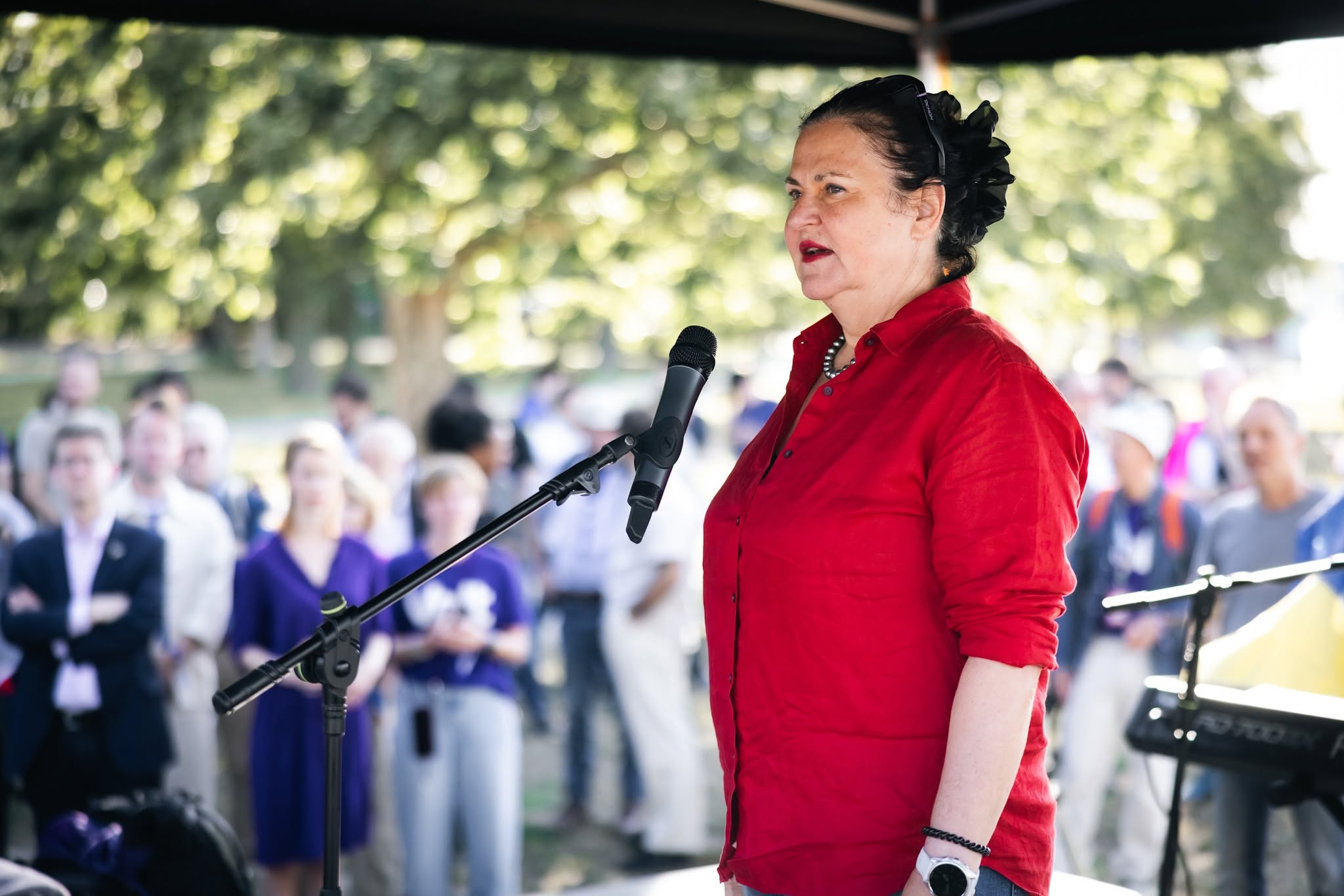
The march was followed by a public rally on Tyršovo embankment, during which guests from Slovakia and abroad spoke.
One of the main speakers was the European Union Ambassador to Ukraine, Katarína Mathernová, who spoke about the continued support of Ukraine on its path to the European Union and the importance of European solidarity in times of ongoing Russian aggression.
Members of the neighboring Volt Ukraine also participated in the march. During the march, they shared with the participants their experiences of life in the country more than four years after the start of the Russian full-scale invasion. Their personal testimonies reminded that European solidarity is not just a political slogan, but concrete support for people who face the consequences of war every day.
The rally closed a day during which Bratislava became a place where European unity was manifested not only in discussions, but also directly on the streets of the city.
|
|
Accompanying social program: Europe without borders
The General Assembly was not just a series of expert discussions. The organizers also prepared a rich accompanying program, the aim of which was to introduce the participants to the history, culture and unique character of Central Europe.
For the first time in the history of Volt Europa, the General Assembly was conceived as a truly cross-border event. The accompanying program did not take place only in Bratislava, but also extended to Austria and Hungary, symbolically showing that cooperation across borders can be a natural part of European life. During a single weekend, the participants naturally traveled between three countries without border controls, discussed their common history and got to know a region that was divided by the Iron Curtain a few decades ago.
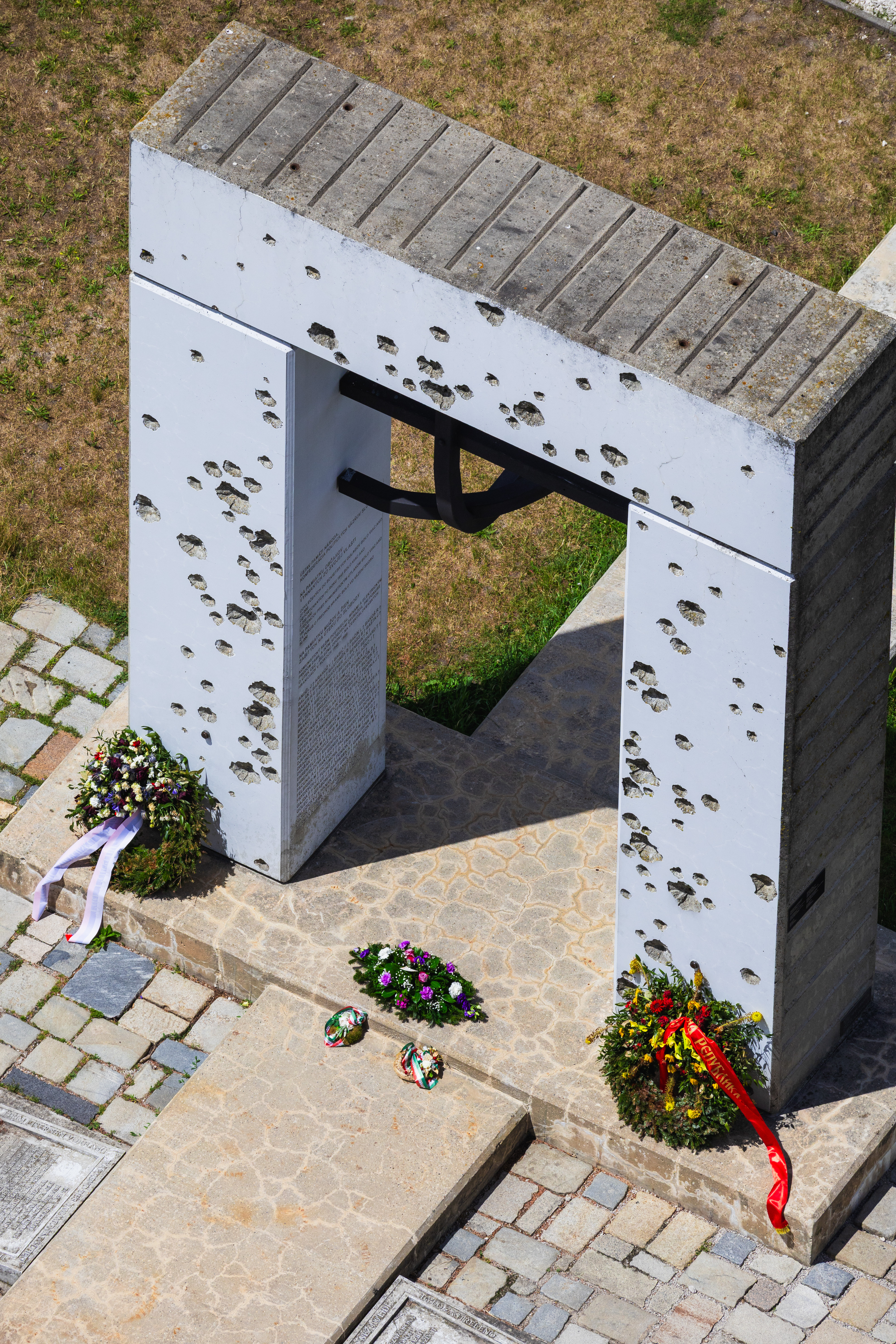
One of the strongest moments was a joint visit to Devín Castle and the "Gate of Freedom" monument. Participants remembered the fates of people who died trying to cross the Iron Curtain on the Slovak-Austrian border between 1945 and 1989. A stop at the Gate of Freedom Monument was a symbolic reminder of the values of freedom of movement, democracy and European cooperation, which we often take for granted today.
|
| |
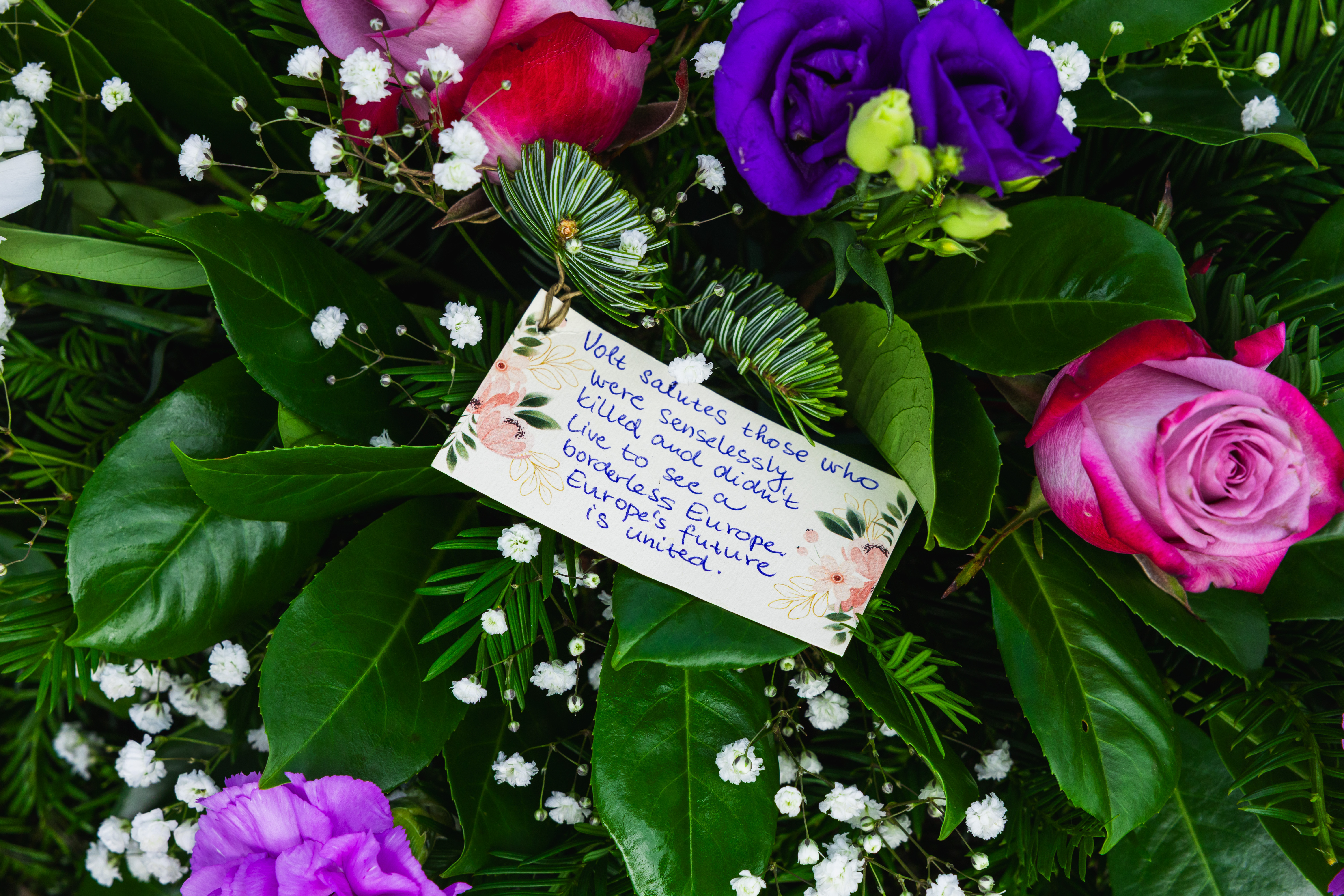
The idea of a Europe without borders was also supported by other accompanying activities. Participants could visit Vienna, take guided tours of the historic center of the Austrian metropolis, or participate in a panel discussion on European security. A joint catamaran cruise from Vienna to Bratislava also aroused great interest, connecting the two capitals, which are only a few dozen kilometers apart, and at the same time created a space for informal meetings of Volt members from all over Europe before the official program began.
The program continued with a trip to Mosonmagyaróvár, Hungary, where participants discussed political changes in Hungary and the future of Central European cooperation. Guided city tours were prepared in Bratislava, which introduced the guests to the history of the capital and its importance in European history.
The program also included community meetings, such as the Volt Women Brunch, which created a space for discussion about the position of women in politics, leadership, and building a pan-European cooperation network. Evening networking events subsequently allowed participants to continue conversations outside the official program and establish new partnerships across Europe.
Bratislava on the European map
The organization of one of the largest Volt Europa events represents a significant milestone not only for Volt Slovakia, but also for Slovakia as a country.
Over the course of one weekend, Bratislava became a place where hundreds of people from all over Europe met to discuss the future of democracy, security, economy and European integration.
For Volt Slovakia, this is proof that even a relatively young organization can prepare an event of pan-European importance and be an active part of shaping European policy.
Join us!
Organizing the Volt Europa General Assembly in Slovakia was only a dream a few years ago, but today it is a reality.
A relatively small but ambitious team managed to bring almost a thousand people from all over Europe to Bratislava, create a space for open discussions about the future of our continent and show that Slovakia can be an active part of pan-European politics. However, our work does not end there.
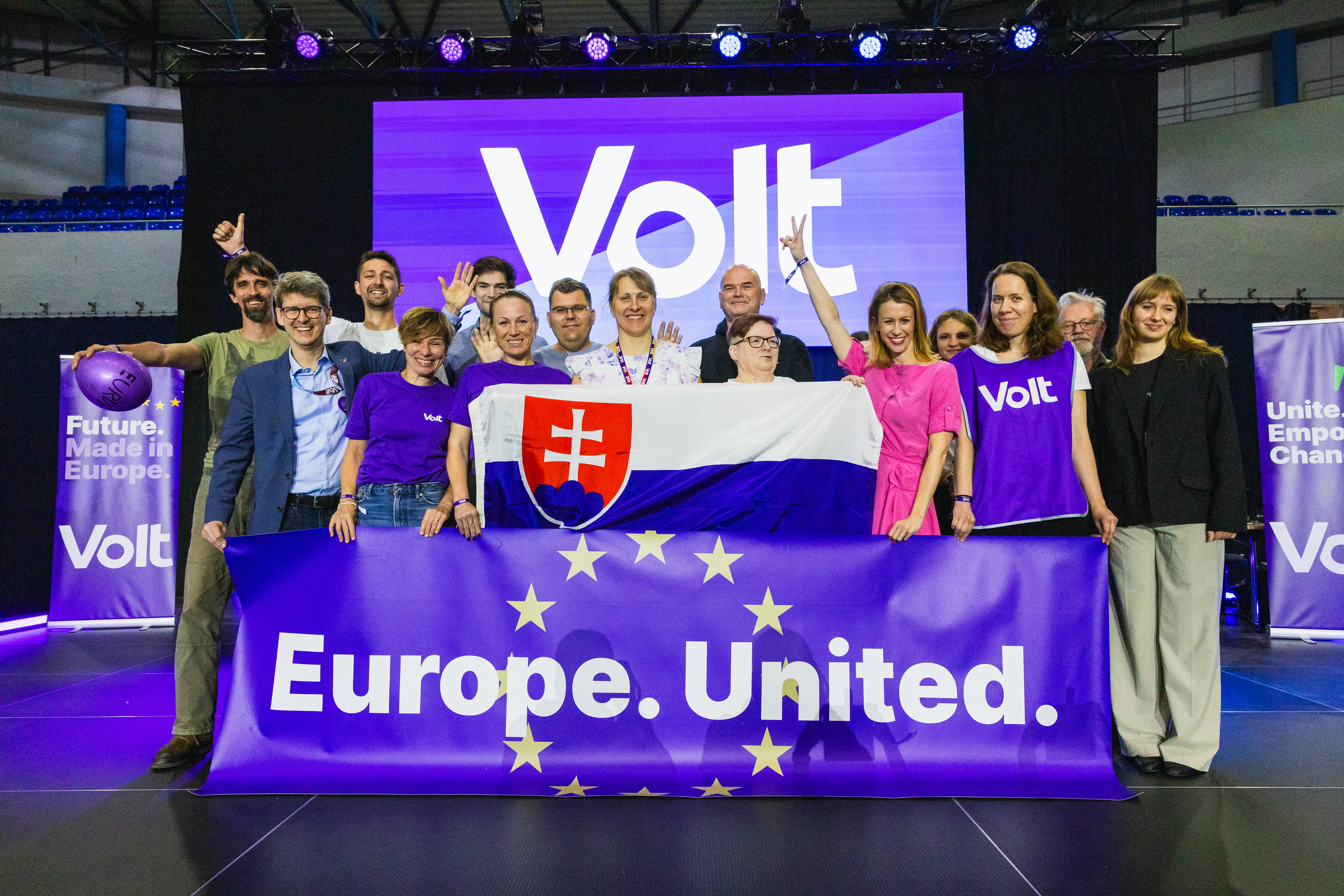
Volt is growing across Europe and now it is time to strengthen our movement in Central Europe – including Slovakia. We are looking for people who believe in an open society, European cooperation, democracy and modern solutions to common challenges.
If you want to be part of this change, join Volt Slovakia. Together we can bring European solutions to Slovakia and build a stronger Europe from the bottom up – from communities to European institutions.